
Fate: Love and Death
SUN 9/27/26 at 4 PM
Performance #339 Season 12, Concert 3
Symphony Space
Zachary Schwartzman conductor
The concert will last approximately 1 hour and 55 minutes.
PLEASE KEEP PHONE SCREENS DIM Silence all electronic devices
PHOTOS AND VIDEOS ARE ENCOURAGED but only before and after the music
The Program
GIUSEPPE VERDI La forza del destino Overture
GUSTAV MAHLER Totenfeier (Funeral Rite)
Intermission
RICHARD WAGNER Prelude and Liebestod from Tristan und Isolde
PYOTR IL’YICH TCHAIKOVSKY Francesca da Rimini
The Music
Verdi’s La forza del destino Overture
Notes by TŌN cellist Hannah Brown
Read Notes
We live in a world predominantly ruled by reason and rugged individualism. To quote the poet William Ernest Henley, “I am the master of my fate, the Captain of my own soul.” Yet, so much of life feels utterly unpredictable, or tragically unstoppable. It stands to reason: how much choice do we have in the outcome of our destiny, and how much is left to fate?
This question tantalized the 19th century celebrity composer Giuseppe Verdi. A self-proclaimed retired composer in the early 1860s, he was won over by the Russian Empire to compose an opera for the imperial city of St. Petersburg in 1862. He chose to base his opera on the Spanish Romantic novel La Fuerzo del Sino. The story is tragic and dramatic, like any good opera. Don Alvaro falls in love with Leonora, a forbidden love due to Alvaro’s mixed heritage and Leonora’s high status in society with her father, Marquis of Calatrava, whom Alvaro accidentally murders. He is continually chased by Don Carlo, brother of Leonora, to avenge his father. Following hidden identities, pleas for spiritual sanctification, and honorable living to overcome failures, the opera culminates in an inevitable demise for all. Alvaro mortally wounds Carlo, who stabs Leonora, leaving Alvaro alone to accept his cruel fate and throw himself into a ravine.
In the score, the fate theme is introduced at the beginning with the brass and bassoons, an unwavering and unrelenting three unison E’s. The violins introduce an anxious melody, followed by a somber melody in the flute, clarinet, and oboe, both in the lower register of the instruments, creating a dark and nervous mood. This reflects the main protagonist Don Alvaro and his dance with fate in the opera. Then the mood changes completely, and a cheery and hopeful character is introduced, representing Leonora and Don Alvaro’s love for her. The nervous motifs from the first section return, alluding to trouble ahead for the main characters. In the end, we surprisingly transition to E major instead of our original E minor, leaving the audience to guess the story’s ending.
These pieces make us appreciate stories, but more than this, they make us consider our world views. Do you consider each action you make inevitably linked to the next? If we are captains of our ship, is the sea ruled by fate or can we command the tempest? I invite you to wrestle with the ideas of fatalism and reason through the masterwork that is Verdi’s overture to La forza del destino.
Mahler’s Totenfeier (Funeral Rite)
Notes by TŌN cellist Christiaan Stefanus van Zyl
Read Notes
Mahler’s Totenfeier, which means “Funeral Rite”, feels less like an observation of death than a confrontation with it. Originally composed as a symphonic tone poem, it eventually became the opening movement of his Second Symphony, the “Resurrection”. Mahler drew inspiration from Friedrich Klopstock’s vision of death and resurrection in the hymn “Die Auferstehung”.
The work begins with an eruption of sound from the lower strings; it is dark and forceful. As a cellist in the orchestra, the opening feels remarkably physical: the resistance of the string, the weight of the bow, and the need to produce enormous sound while staying completely controlled. The cellos are at the heart of this struggle, often sounding like a single immense voice.
The brutality repeatedly gives in to a beautiful tenderness with melodies and moments of extraordinary vulnerability. Themes emerge from the shadows, searching for meaning only to be swept away by another orchestral outburst. There is a distinct contrast between the heavy, downward pull of the opening and the repeated attempts to rise above it. Mahler creates a dramatic tension between gravity and transcendence, despair and hope. The cello is uniquely suited to this journey. It carries the dark resonance of the lower strings while still possessing the warmth and intimacy of a human singing voice.
As the piece unfolds, Mahler builds enormous waves of sound, interrupted by moments of reflection and uncertainty. The orchestra becomes almost theatrical, moving through anger, mourning, questioning, and moments that seem to glimpse something beyond the earthly world. Even without knowing the story behind the music, the emotional trajectory is unmistakable.
For a cellist, performing Totenfeier means living inside these contradictions, attacking without losing warmth, projecting without becoming coarse, and sustaining a phrase while the world around it seems to collapse. The bow becomes part of the emotional language: pressure, release, resistance, breath.
And that is perhaps the lasting power of Totenfeier. Mahler does not offer a simple portrait of death. He gives us the experience of confronting it—and leaves us sensing that the darkness is not the end, but the beginning of a larger journey toward resurrection.
Wagner’s Prelude and Liebestod from Tristan und Isolde
Notes by TŌN horn player Lee Cyphers
Read Notes
In 1857, Richard Wagner was living in exile, deep in debt, hounded by creditors, and in a tumultuous marriage, partly due to his own infidelity. A friend, Otto Wesendonck, allowed Wagner and his wife Minna to stay on his estate in Zurich, where an emotional affair began between Wagner and Wesendonck’s wife Mathilde. It was around this time that Wagner paused his work on Siegfried, the third opera in his famous Ring of the Nibelung, to write Tristan und Isolde. Wagner’s longing for Mathilde, and the fact that their relationship was never consummated, likely inspired his opera about tragic, impossible love.
Beginning in the 1840s, Wagner’s operas set him apart from his French and Italian contemporaries by eschewing clichéd storylines and traditional aria forms. Instead, he developed his technique of using leitmotifs to represent the action onstage, weaving the opera together in a structure of continuous music. The Ring of the Nibelung is a maximalist epic, and the cycle uses many leitmotifs to represent the Valkyries, Nothung the sword, the Rhine River, and other aspects of the sprawling plot.
In Tristan, the plot is simplified and abstracted; everything revolves around two characters who love each other and cannot be together. This is reflected musically, as the opera centers around the very first chord of the prelude, dubbed the “Tristan chord” because of its uniquely ambiguous harmony. Two chromatic lines pull away from each other in a dissonance that evades and displaces resolution, illustrating the main characters’ yearning for each other as they are wrested apart by fate. The tension continues to ratchet up throughout the four-hour opera until the final scene, Isolde’s Liebestod, a combination of the German words for “love” and “death.” Only when Isolde collapses atop Tristan’s lifeless body does the orchestra deliver the long-awaited B-major chord. The music is the story just as much as the text, and the listener, just like Wagner’s star-crossed lovers, is gripped by a burning passion that rages for the entire opera. Tristan and Isolde can only be together in death, and this makes their love tortured but perfect, unsullied by lived reality. Our two leads do not have to suffer the indignity of getting what they want.
Tchaikovsky’s Francesca da Rimini
Notes by TŌN bassist Nozomi Sugimoto
Read Notes
How vividly do you remember Dante’s Inferno? Tchaikovsky’s Francesca da Rimini might help you reimagine it. This symphonic fantasy is based on the tragedy of Francesca and Paolo from Canto V.
Tchaikovsky had considered turning Francesca’s story into an opera before his brother Modest suggested it as the subject of a symphonic poem. In 1876, while traveling, he read Dante’s Inferno and felt inspired to compose the work.
During the same journey, Tchaikovsky heard Wagner’s Ring at Bayreuth and later acknowledged its influence on Francesca da Rimini. I can hear this influence especially in the opening, in its unresolved harmonies and its heavy, enormous sound. I had always felt a similarity between Wagner and Tchaikovsky in the way they create a thick and powerful orchestral sound, so while researching this piece, it was fascinating to discover this connection. Perhaps musicians have not changed that much over time. When we encounter something great, we naturally want to try it in our own music.
In the second circle of Hell, Dante encounters Francesca and Paolo among souls swept forever through a violent storm, which Tchaikovsky depicts with a wild and powerful orchestra. The music eventually changes completely as Francesca begins to tell her story. Married to Giovanni Malatesta, Francesca fell in love with his brother Paolo, and they kissed while reading the story of Lancelot together. What stays with me most is the melody here. It is beautiful, but also somehow unstable. To me, it feels like a fleeting dream, destined to disappear almost as soon as it begins. But Francesca and Paolo are killed by Giovanni, and the music becomes violent again, almost as if we are suddenly pulled out of the dream and back into reality. They are swallowed once again by the storm of Hell.
I have always felt that Tchaikovsky’s music has some sense of hope or salvation somewhere, no matter how dark or heavy it becomes. But I find very little of that in Francesca da Rimini. Even its most lyrical moments eventually disappear without finding any sense of resolution. Listening to this piece feels to me like turning the pages of a novel, as the story of Francesca and Paolo unfolds through the music.
The Artists
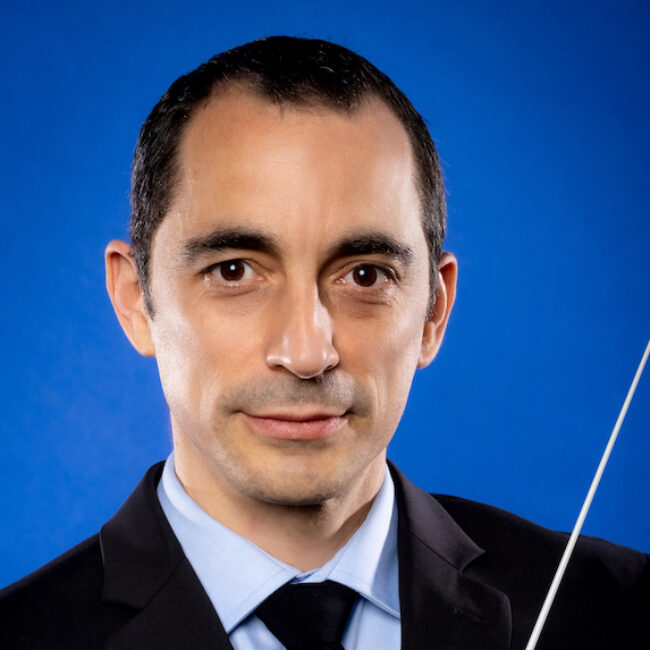
ZACHARY SCHWARTZMAN conductor
Zachary Schwartzman currently serves as resident conductor and director of orchestral performance of The Orchestra Now (TŌN), associate conductor of the Bard Conservatory Orchestra, music director of the Bard College Community Orchestra, and associate professor of music for Bard College and the Bard College Conservatory of Music. He has appeared numerous times as both assistant conductor and conductor at Bard SummerScape and the Bard Music Festival at the Fisher Center at Bard.
Read More
Schwartzman’s symphonic performances have been featured on NPR, including a national broadcast on Performance Today. A recipient of the career development grant from the Bruno Walter Memorial Foundation, he has conducted orchestras around the United States, in Europe, and Latin America. He served as assistant conductor for L’Ensemble orchestral de Paris and the Oakland East Bay Symphony, among other symphonic ensembles, and has held the post of assistant conductor with the American Symphony Orchestra since 2012.
Schwartzman’s extensive operatic credits include two seasons as associate conductor with New York City Opera, where he conducted in their VOX series, and two productions for the Vocal Arts Program at The Juilliard School. He has served as associate or assistant conductor for 15 productions at Glimmerglass Opera, conducting performances of La Traviata, Carmen, and the world premiere of Jeanine Tesori’s A Blizzard on Marblehead Neck. Additionally, he has worked with Deutsche Oper Berlin, Opera Atelier (Toronto), Berkshire Opera Festival, Opéra Français de New York, Gotham Chamber Opera, Connecticut Grand Opera, and Opera Omaha, and completed a 12-year tenure as music director of the Blue Hill Troupe.
Schwartzman’s credits as assistant conductor include recordings on Albany, Bridge, Naxos, Hyperion, and AVIE Records; Canary and Sorel Classics; and a Grammy-nominated world-premiere recording for Chandos Records. In addition to degrees in piano performance and orchestral conducting, he earned a B.A. in East Asian studies from Oberlin College.
THE ORCHESTRA NOW (TŌN)
Founded in 2015 by Bard College, TŌN is a graduate program that is training the next generation of music professionals to become creative ambassadors of classical music. Led by conductor and educator Leon Botstein, TŌN offers accomplished young musicians a full-tuition fellowship toward a master’s degree in curatorial, critical, and performance studies or an advanced certificate in orchestra studies. TŌN’s innovative curriculum combines rehearsal, performance, recording, and touring with seminars, masterclasses, professional development workshops, teaching, and more. The members of the orchestra are graduates of the world’s leading conservatories, and hail from countries across North and South America, Europe, and Asia. Many have gone on to have careers in the Philadelphia, San Francisco, Boston, Vancouver, and National symphony orchestras; Orquesta Sinfónica Nacional de Colombia; the United States military bands; and many others.
Read More
TŌN performs dozens of concerts a year at venues including Carnegie Hall, Lincoln Center, and the Fisher Center at Bard. Specializing in both familiar and rarely heard repertoire, the orchestra has given numerous New York, U.S., and world premieres, and has performed the work of living composers, including Joan Tower, Jessie Montgomery, Jonny Greenwood, and Tania León. In May 2025, TŌN performed two concerts in Koblenz and Nuremberg, Germany marking 80 years since the surrender of Nazi Germany. In 2023, TŌN appeared with Bradley Cooper in the Academy Award-nominated film Maestro, and was featured on the Grammy-winning Deutsche Grammophon soundtrack, conducted by Yannick Nézet-Séguin. The orchestra has performed with many other distinguished guest conductors and soloists, including Leonard Slatkin, Gil Shaham, Neeme Järvi, Stephanie Blythe, Fabio Luisi, Vadim Repin, Joseph Young, Peter Serkin, Naomi Woo, Peter Moore, Tan Dun, and JoAnn Falletta.
TŌN has released several albums on the Hyperion, Sorel Classics, and AVIE labels. Fall 2025 releases include Premieres with violinist Gil Shaham and Transcription as Translation. Other highlights include 2024’s The Lost Generation and Exodus, and rare recordings of Othmar Schoeck’s Lebendig begraben and Bristow’s Arcadian Symphony. Recordings of TŌN’s live concerts from the Fisher Center can be heard regularly on Classical WMHT-FM and WWFM The Classical Network, and the orchestra has appeared over 100 times on Performance Today, broadcast nationwide.
Visit ton.bard.edu to find out more about TŌN’s academic program, concerts, musicians, albums, and broadcasts; sign up for the email list; and support the orchestra with a donation.
Leon Botstein Music Director
Violin I
Hanyu Feng Concertmaster
Jolin Yi-Lin Lin
Mingyue Xia
Anna Maria Cristina Popan
Xiaomeng Ma
Sansa Wang
Joas Erasmus
Shan (Serena) Bai
Yuchen Zhao
Angeles Hoyos TŌN ’25
Violin II
Yuxuan Feng Principal
Anna Wallace
Luca Sakon
Iasmim Bonfim de Carvalho
Chance McDermott TŌN ’26
Haley Maurer Gillia TŌN ’26
Lana Auerbach TŌN ’25
Gökçe Erem
Lap Yin Lee not performing in this concert
Carlos Torres not performing in this concert
Viola
Carla Mendoza Trejo Principal
Benjamin Duke
Yuxuan Zhang
Flavia Pájaro-van de Stadt
Casey Lebkicker
Enoch Ng
Chia-Mei (Lily) Li not performing in this concert
Cello
Kate Hwang Principal
Alex Engelhardt
Alfred Western
Stella Torkelson
Nohyoon Kwak
Maria Paula Casas
Hannah Brown not performing in this concert
Shawn Thoma not performing in this concert
Christiaan Stefanus van Zyl not performing in this concert
Bass
Nozomi Sugimoto Principal
Moisés Chirinos
Zacherie Small
Luisa Torres
Jack Corcoran not performing in this concert
Shion Kim not performing in this concert
Flute
Youbeen Cho Principal (Verdi, Mahler)
Christian Midy Principal (Wagner, Tchaikovsky)
Wen-Hsiu (Angela) Lai Piccolo (Verdi)
Oboe
Aaron Haettenschwiller Principal
Mark Sophia
Sooyoung Kim English Horn
Nathalie Graciela Vela not performing in this concert
Clarinet
Eric Huang Principal (Verdi, Mahler, Wagner)
Timothy Coffey Principal (Tchaikovsky), Bass Clarinet (Mahler, Wagner)
Craig Swink
Bassoon
Shelby Capozzoli Principal (Verdi, Mahler)
Alejandro Morillo Principal (Wagner, Tchaikovsky)
Peter Houdalis
Horn
Lee Cyphers Principal (Verdi, Mahler)
Felix Johnson Principal (Wagner, Tchaikovsky)
Ashton Sady
Jack Sindall
Jaxson Padgett Assistant
Trumpet
Nathan Lyle Principal (Verdi), Cornet (Tchaikovsky)
Isaac Morton Principal (Mahler)
Kassandra Miano Principal (Wagner), Principal Cornet (Tchaikovsky)
Antonio Fiorenza IAP ’27 Assistant (Mahler)
Trombone
Ethan Pound Principal (Verdi, Mahler)
Yuki Mori Principal (Wagner, Tchaikovsky)
Charlie Hall Bass Trombone
Tuba
Joel Horton
Timpani
Pei Hsien (Ariel) Lu
Percussion
Philip Drembus
Jonathan Monk
Juan Diego Mora Rubio ’25
Harp
Zibin Zhou
Keyboard
Francis Chung-Yang Huang
Support TŌN
We’ve brought music to more than 120,000 live & virtual concertgoers in over 325 concerts thanks to support from donors like you!
The TŌN Fund
Members of The Orchestra Now are completing an innovative graduate degree program. TŌN offers students the experiences they might expect as career orchestral musicians—including public performance, touring, and recording. TŌN is tuition free, and each student receives a yearly fellowship stipend. Individual contributions from music lovers like you are essential to TŌN’s success.
To donate, visit ton.bard.edu/support or call 845-758-7988.
SEEDING THE FUTURE: NAMING OPPORTUNITIES
You can play a defining role in TŌN’s success with a commitment towards one of the following categories.
TŌN Fellowship Fund
Direct your support to have a lasting impact on the education and training of TŌN’s exceptional young players from around the world with a gift at one of the following levels:
–Three-Year Master’s Fellowship: $75,000
–Two-Year Certificate Fellowship: $50,000
–One-year Fellowship Stipend: $25,000
TŌN Recording Fund
Each season TŌN musicians experience the recording process. TŌN has released several albums on the Hyperion, Sorel Classics, and AVIE labels. Designate your contribution in support of the orchestra’s growing catalogue of rediscovered works with a gift of $50,000+.
TŌN Instrument Fund
TŌN owns and maintains all of its percussion, timpani, and several auxiliary instruments. Hear your support from the stage with a gift of $10,000+.
There’s simply no other music degree program like TŌN. Help us to inspire greatness by making a contribution today.
Donors at the $2,500 Allegro level and above can be commemorated by having a seat named for them in the Fisher Center at Bard’s magnificent Sosnoff Theatre.
For detailed information on naming opportunities and the many ways to give, please contact Nicole M. de Jesús, Director of Development, at 845-758-7988 or [email protected].
TŌN Donors Inspire Greatness
TŌN gratefully acknowledges the generosity of each and every donor who makes our work possible. We hope you share our pride in the TŌN alumni/ae: to date, our musicians have earned positions in over 100 orchestras and ensembles across the U.S., Europe, and Asia; are seated in four U.S. military bands; and are working as educators or administrators at more than 50 music and educational institutions across the country.
Ticket sales cover less than a quarter of the expenses for our concerts and educational initiatives. Your contributions enable TŌN to flourish, and with your sustained support, we can continue this unique educational program for classical musicians on the cusp of professional careers. Thank you for making an important investment in the future of classical music.
Leadership Gifts
Estate of Clyde Talmadge Gatlin
E&V ProArte Fund
Michael L. Privitera
Rockefeller Brothers Fund
Felicitas S. Thorne
The Yvonne Nadaud Mai Concertmaster Chair
Made possible by The Mai Family Foundation
Fellowship Support
The Ponsold-Motherwell Charitable Trust, in memory of Renate Ponsold and Robert Motherwell
Concertmaster’s Chair
Anonymous
Concertmaster’s Circle
Joseph J. Baxer and Barbara Bacewicz
Lynn Ernst and Jonathan Bachman
Kassell Family Foundation of the Jewish Communal Fund
The Merrill G. and Emita E. Hastings Foundation
Emily Sachar
Conductor’s Box
A&J Serenity Fund
Irene and Tom Esposito
Rachel Jewelewicz-Nelson, in memory of David Nelson
Deborah H. M. McManus
Karl Moschner and Hannelore Wilfert
Barry Nalebuff and Helen Kauder
Nationwide Foundation
Allegro
Gary M. Giardina
Bernard and Lisa S. King-Smith
Vivace
Jamie Albright and Steve Hart
Mildred Feinsilber
Christine T. Munson
Dimitri B. Papadimitriou and Rania Antonopoulos Papadimitriou
Denise S. Simon and. Paulo Vieiradacunha
Marc A. and Dana Lim vanderHeyden
Forte
Anonymous
James Braun and Kirk N. Lawson
Sal Capolarello and George Wen
Dr. Sanford Friedman and Virginia Howsam
Friends of Beattie-Powers Place
Elena R. and Fred Howard
Susan and Roger Kennedy
Robert Kurilla and Greg Paxton
Edna and Gary Lachmund
Miriam Levy
Judi Powers
Sara T. Rabbino
Richard and Enid Rizzo
Susan Seidel
Arlene and Gilbert Seligman
Jen Shykula ’96 and Tom Ochs
Gabrielle E. Tenzer
Randy Tyron and Dan DeBerardinis
Linda Tyrrell, in memory of Gary Edward Morgan
Trumpeter
Arleen Auerbach
Catherine M. Baiardi
John Cubba and John Cirincion
Curtis DeVito and Dennis Wedlick
Maia Farish, in memory of Don Farish
Mark L. Feinsod ’94
Mark Fuerst, in honor of Debra Pemstein and Dean Vallas
Michel Goldberg and Frances Spark
Jan M. Guifarro
George Jahn and Karen Kaczmar
Gene and Sue Johnson
Alison L. Lankenau
Laurie Lauterbach
Koren C. Lowenthal
Martha V. Lyon
Northwestern Mutual Foundation
Linda A. Schwab-Edmundson
Dan Schwartzman and Julie Nives, in memory of Irwin Schwartzman and Ernest Nives
Anne-Katrin Spiess
Kornelia Tamm
Rob and Sue Thoma, in honor of Shawn Thoma TŌN ’27
David and Marcia Welles
Crescendo
Nicole M. de Jesús ’94 and Brian P. Walker
Phyllis and Joe DiBianco
Hildegard F. Edling ’78 and Richard Edling
Entergy
Stan Harrison
Brian J. Heck
Scott Huang
Charlotte Kelly ’90 and Robert Kelly
John D. Metcalfe
Robert K. Montgomery
Ken and Lindsay Morgan
Paul W. Oakley
Michael J. Piecuch
Catherine Reinis
Bruce and Blanche Rubin
Kayoko Sakon, in honor of Luca Sakon TŌN ’27
Judith R. Thoyer
Gene L. Vidal
Hugh Young
TŌNor
Anonymous
Judy Behrens
Richard Brand
Mary-Louise Brauch
William H. Brewton
Geri Brodsky
Michael Bykofsky, MD in memory of Jacob and Fanny Bykofsky
Joanne Chu
Marc and Margaret Cohen
Diane Cunningham
Vincent M. Dicks
Renate L. Friedrichsen
Elizabeth L. Greek
Tamara J. Gruszko
Lee Haring
Michaela Harnick
William J. Harper
Jack Homer and Emily Hartzog
Hospitality Committee for United Nations Delegations
Tyler J. Lory, in honor of Dillon Robb TŌN ’21
Maury Newburger Foundation
Judith Nelson, in memory of Bill and Mary Nelson
Michael Pollock
Kelly A. Preyer and James Blakney
Éric Trudel
Nancy Wight
Sandy Zito
Downbeat
Anonymous
Matthew C. Bernstein
Katherine B. Berry
Marge and Edward Blaine
Kent Brown and Nat Thomas
Marsha Suer Clark
Richard S. Clark
Joan S. Cohen
David and Joan Covintree
Thomas J. DeStefano
Ellen Monica Fennell
Catherine Fishman
Helena and Christopher H. Gibbs
Susan Goodstadt-Levin
Carol A. Goss
Oliver and Linda Hansen
Nancy S. Hemmes
William Hibsher
Paul Hraska
Robert V. Kamp
Barbara Komansky
Carol E. Lachman
Jane W. Meisel
Warren R. Mikulka
Andrea and James Nelkin
Michael P. Pillot
Stan Ries
Brigitte R. Roepke
Rosina Romano
Mary T. Sheerin
Theodore J. Smith
The Talays
Ronald Tatelbaum
George A. Wachtel
Susan L. Waysdorf and Mary K. O’Melveney
Prelude
Anonymous
Carolynn F. Anklam
Sol Bergelson
Lydia Chapin
Lucinda DeWitt
Michael Feiler
Shawn Hutchison TŌN ’22
Steven Jonas MD
Roni Katz
Elyse Lichtenthal
Pat Miller
H. Paul Moon
Shari Siegel
This list represents gifts made to The Orchestra Now from July 1, 2025 to September 7, 2026.
There are many ways to support TŌN. To make your gift now, or to update your listing, please contact Nicole M. de Jesús at [email protected] or 845-758-7988. Thank you for your partnership!
The Administration
TŌN
Artistic Staff
Leon Botstein Music Director
James Bagwell Associate Conductor and Academic Director
Jindong Cai Associate Conductor
Zachary Schwartzman Resident Conductor and Director of Orchestral Performance
Leonardo Pineda ’15 TŌN ’19 Guest Conductor for Educational Partnerships and Music Lecturer
Erica Kiesewetter Professor of Orchestral Practice
Keisuke Ikuma Director of Chamber Music
Sima Mitchell First Year Seminar Faculty
Nicolás Gómez Amín GCP ’25 Assistant Conductor
Administrative Staff
Kristin Roca Executive Director
Petra Elek Capabianca ’16 APS ’20 TŌN ’24 Orchestra Manager
Grace Anne Stage Manager and Assistant Orchestra Manager
Viktor Tóth ’16 TŌN ’21 Special Events Coordinator and Eastern/Central European Music Curator
Matt Walley TŌN ’19 Program Coordinator, Admissions and Artist Relations
Sebastian Danila Music Preparer and Researcher
Benjamin Oatmen Librarian
Dariimaa Barsaikhan TŌN ’26 Assistant Librarian
Shawn Hutchison TŌN ’22 Recruitment and Alumni/ae Coordinator
Marketing & Development Staff
Brian J. Heck Director of Marketing
Nicole M. de Jesús ’94 Director of Development
Pascal Nadon Public Relations
Fisher Center at Bard Orchestra Production Staff
Stephen Dean Orchestra Production Manager
Marlan Barry Head Classical Recording Engineer/Producer
Emmanuel Cohen Orchestra Stagehand
Dávid Kéringer IAP ’24 TŌN ’26 Assistant Orchestra Stage Manager
Michael Lynam Piano Technician
Liz Cohen Orchestra Stage Manager
Nora Rubenstone-Diaz ’11 Associate Orchestra Production Manager
Matthew Strieder ’21 Assistant Orchestra Production Manager
Ellie Wolfe-Merritt Orchestra Stage Manager
BARD COLLEGE
Board of Trustees
Brandon Weber ’97 Chair
Barbara S. Grossman ’73 Vice Chair; Alumni/ae Trustee
Charles S. Johnson III ’70 Vice Chair
Elizabeth Ely ’65 Secretary
Andrew S. Gundlach Treasurer
Fiona Angelini
Jonathan Becker Acting President of the College, ex officio
James M. Clark Jr. SR ’76 ex officio
Marcelle Clements ’69 Life Trustee
Andrew Delbanco
Asher B. Edelman ’61 Life Trustee
Kimberly Marteau Emerson ex officio
Emily H. Fisher
George F. Hamel Jr.
The Rt. Rev. Matthew F. Heyd Honorary Trustee
Catharine “Cappy” Bond Hill
Mark N. Kaplan Life Trustee
George A. Kellner
Fredric S. Maxik ’86
Jo Frances Meyer ex officio
Juliet Morrison ’03
James H. Ottaway Jr. Life Trustee
Myran Parker-Brass ex officio
Hilary Pennington
Martin Peretz Life Trustee
Lucas Pipes ’08
Stanley A. Reichel ’65 Life Trustee
Stewart Resnick Life Trustee
David E. Schwab II ’52 Life Trustee
Roger N. Scotland ’93 Alumni/ae Trustee
Annabelle Selldorf
Jonathan Slone ’84
Thomas J. Vallely
James von Klemperer
Susan Weber
Senior Administration
Jonathan Becker Acting President
Coleen Murphy Alexander ’00 Vice President for Administration
Erin Cannan Vice President for Civic Engagement
Deirdre d’Albertis Vice President; Dean of the College
Malia K. Du Mont ’95 Vice President for Strategy and Policy
Peter Gadsby Vice President for Institutional Research; Registrar
Max Kenner ’01 Vice President; Executive Director, Bard Prison Initiative
Debra Pemstein Vice President for Development and Alumni/ae Affairs
Taun Toay ’05 Senior Vice President; Chief Financial Officer
Stephen Tremaine ’07 Vice President of Network Education; Chief of Staff
Daniel Vasquez ’17 Vice President of Strategic Partnerships and Institutional Initiatives
Dumaine Williams ’03 Vice President for Student Affairs; Dean of Early Colleges
THE ORCHESTRA NOW (TŌN) ton.bard.edu / @theorchnow
BARD COLLEGE bard.edu
© 2026 The Orchestra Now
Program and artists subject to change.