
Franck, “Faust”, and “William Tell”
SUN 3/8/26 at 4 PM
Performance #326 Season 11, Concert 19
Symphony Space
Zachary Schwartzman conductor
The concert will last approximately 1 hour and 55 minutes.
PLEASE KEEP PHONE SCREENS DIM Silence all electronic devices
PHOTOS AND VIDEOS ARE ENCOURAGED but only before and after the music
The Program
GIOACHINO ROSSINI William Tell Overture
CHARLIES GOUNOD Faust Ballet Music
The Nubian Women
Adagio
Antique Dance
Cleopatra Variations
The Trojan Women
Mirror Variations
Dance of Phryné
Intermission
CÉSAR FRANCK Symphony in D Minor
Lento—Allegro non troppo
Allegretto
Allegro non troppo
The Music
Rossini’s William Tell Overture
Notes by TŌN cellist Hannah Brown
Read Notes
What do The Princess Diaries, The Lone Ranger, Bugs Bunny, Indiana University’s basketball team, and the video game “Just Dance” all have in common? The answer may surprise you: opera.
Rossini’s William Tell is a classic early-19th-century opera: an Italian composer writing a French libretto about a Swiss hero in a German-speaking region. As the legend goes, William Tell is a skilled archer and rebel in the 14th century Uri canton of Switzerland. Under oppression by the Habsburgs, with the region’s appointed leader, Albrecht Gessler, Tell actively defies the foreign rulers by not bowing down to Gessler’s hat on the village Linden tree. Gessler calls for the execution of both Tell and his son, with a caveat: should Tell be able to shoot an apple off his son’s head, both Tell and his son would be spared. Undaunted, Tell splits the apple, but admits to taking out two arrows, the second one to kill Gessler in case his apple attempt was unsuccessful. Enraged, Gessler sentences Tell to life imprisonment. Tell boards a ship that traverses Lake Lucerne during a tumultuous storm. Panic stricken, the guards plead to release Tell so he can steer the ship. He’s released and steers to shore, then leaps from the boat to seek his own freedom. Pursued by Gessler, they face off at the Hohle Gasse, where Tell successfully shoots Gessler with his second arrow, ends aristocratic rule, and begins the Swiss Confederacy.
In Rossini’s opera, he summarizes this legend in the delightful overture, which Berlioz described as a mini “symphony in four parts.” Dawn begins with a gorgeous five-part cello solo, describing the sun peeking over the Swiss mountains. The second part is a storm sequence, recalling the ship on which Tell is aboard. Then we’re relieved by a pastoral third movement featuring the English horn and flute evoking simple shepherd life in the valleys around Lake Lucerne. Finally, the infamous fourth movement begins, the March of the Swiss Soldiers (or, in colloquial terms, the Lone Ranger theme), symbolizing Tell fleeing from the grasp of Gessler and ultimately conquering aristocratic rule.
Between the captivating cello soli lines, gentle melodies in the woodwinds, and cowboy march, it’s not hard to see why Tell has become a fan favorite worldwide. We hope you enjoy Rossini’s William Tell!
Gounod’s Faust Ballet Music
Notes by TŌN percussionist Cooper Martell
Read Notes
Charles-François Gounod was a French composer known primarily for his operas. He wrote Faust, his most famous opera, in 1859. His “Ballet Music” was added for the production at the Paris Opera to fulfill the French Grand Opera tradition. Gounod initially refused to write the ballet music and asked Camille Saint-Saëns to do it for him. Eventually he conceded, and his “Ballet Music” is now more frequently performed as a suite in concert than in performances of the opera.
The added ballet, in seven movements, occurs at the beginning of the fifth and final act of Faust, when Méphistophélès distracts Faust from his guilt toward Marguerite, the love interest he has abandoned, by promising him the love of the most beautiful women in history. In a series of intoxicating illusions, Faust is visited by historical figures including Cleopatra, Helen of Troy, and finally Phryne. The suite is a whirlwind of character and emotion, opening with a portentous introduction of repeated chords in the brass, resembling a warning, and quickly lightening into a carefree waltz. From there the music takes us on a journey, becoming romantic and even flirtatious in the adagio, mischievous in the Antique Dance, teasing in the Cleopatra Variations, dreamy in The Trojan Women, and playful in Mirror Variations. The final movement, Dance of Phryné, is a rollercoaster in itself, beginning frantic and dizzying, abruptly becoming light and charming, and then just as suddenly returning to the agitation and ending in a frenzy. After this disorienting hallucination, Faust is reminded of Marguerite in a vision and rushes to save her.
Franck’s Symphony in D Minor
Notes by TŌN horn player Felix Johnson
Read Notes
César Franck was a French Romantic composer, teacher, and organist born in Liège and later established in Paris. His Symphony in D Minor, perhaps his best known orchestral work, was started in 1887 and premiered by the Paris Conservatoire Orchestra in February of 1889. It is the only symphony written by Franck in the prime of his compositional career. The piece is structured in a comparatively unique way, having only three movements as opposed to the more traditional four. These three movements are almost cyclically focused on thematic material introduced in the first movement, with Franck returning continually to these opening measures, particularly in the coda of the Finale.
In the musically conservative and nationalistic environment of late-19th century Paris, Franck’s symphony was met with a rather divided reception. Some critics appreciated the piece’s themes and orchestration, while others, particularly Franck’s contemporary Charles Gounod, found it overbearing and overly insistent. Despite this, the symphony quickly became popular outside of Paris, and within the following decades became a definitive standard throughout the concert halls of Europe and the United States. Today, Franck’s Symphony in D Minor has fallen in popularity. In an article titled “What Happened to One of Classical Music’s Most Popular Pieces?” the journalist David Allen shows that in recent decades the Symphony has become a relative rarity. I find this to be quite a shame as the piece fits very nicely on an orchestral program and has some truly beautiful material. I encourage particular attention to the eerie opening of the second movement, in the strings and harp, where the English horn gives way to a gorgeous melody shared between the clarinet and French horn. In its totality, Franck’s Symphony in D Minor should be viewed as a standard of the late-Romantic period both because of its history and the merits of the composer’s writing.
The Artists
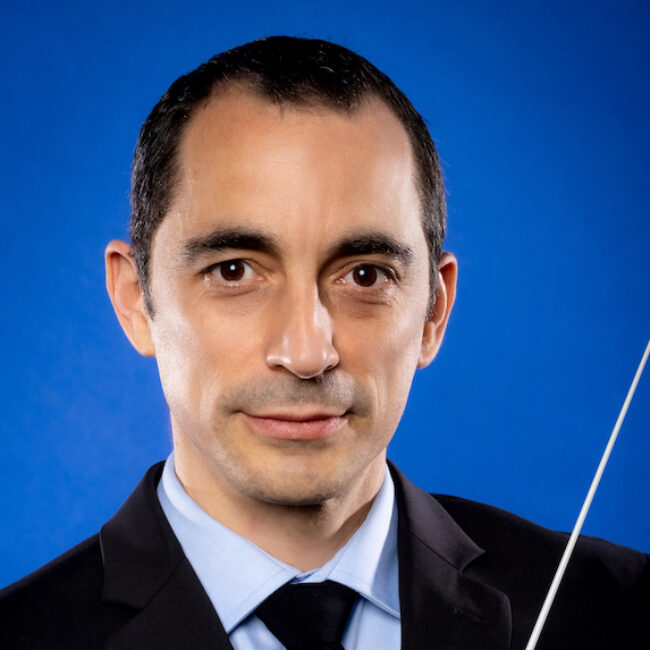
ZACHARY SCHWARTZMAN conductor
Zachary Schwartzman has conducted around the United States, in Brazil, England, Bosnia, and Mexico. His orchestral performances have been featured on NPR, including a national broadcast on “Performance Today.” A recipient of the career development grant from the Bruno Walter Memorial Foundation, he has served as assistant conductor for the Deutsche Oper Berlin, Opera Atelier (Toronto), Berkshire Opera Festival, Opéra Français de New York, L’Ensemble orchestral de Paris, Gotham Chamber Opera, Oakland East Bay Symphony, Connecticut Grand Opera, and Opera Omaha, among others. He was associate conductor for two seasons with New York City Opera, as well as conductor in their VOX series, and has been associate/assistant conductor for fifteen productions at Glimmerglass Opera, where he conducted performances of Carmen and the world premiere of Jeanine Tesori’s A Blizzard on Marblehead Neck.
Read More
Mr. Schwartzman’s credits as assistant conductor include recordings for Albany Records, Bridge Records, Naxos Records, Hyperion Records, and a Grammy-nominated world-premiere recording for Chandos Records. He had a twelve-year tenure as music director of the Blue Hill Troupe and has been assistant conductor for the American Symphony Orchestra since 2012. He has appeared as both assistant conductor and conductor at Bard SummerScape and the Bard Music Festival at The Richard B. Fisher Center for the Performing Arts. He is currently resident conductor of The Orchestra Now (TŌN) and music director of the Bard College Community Orchestra. In addition to degrees in Piano Performance and Orchestral Conducting, he earned a B.A. in East Asian Studies from Oberlin College.
THE ORCHESTRA NOW (TŌN)
Founded in 2015 by Bard College, TŌN is a graduate program that is training the next generation of music professionals to become creative ambassadors of classical music. Led by conductor and educator Leon Botstein, TŌN offers accomplished young musicians a full-tuition fellowship toward a master’s degree in curatorial, critical, and performance studies or an advanced certificate in orchestra studies. TŌN’s innovative curriculum combines rehearsal, performance, recording, and touring with seminars, masterclasses, professional development workshops, teaching, and more. The members of the orchestra are graduates of the world’s leading conservatories, and hail from countries across North and South America, Europe, and Asia. Many have gone on to have careers in the Philadelphia, San Francisco, Boston, Vancouver, and National symphony orchestras; Orquesta Sinfónica Nacional de Colombia; the United States military bands; and many others.
Read More
TŌN performs dozens of concerts a year at venues including Carnegie Hall, Lincoln Center, The Metropolitan Museum of Art, and the Fisher Center at Bard. Specializing in both familiar and rarely heard repertoire, the orchestra has given numerous New York, U.S., and world premieres, and has performed the work of living composers, including Joan Tower, Jessie Montgomery, Jonny Greenwood, and Tania León. In May 2025, TŌN performed two concerts in Koblenz and Nuremberg, Germany marking 80 years since the surrender of Nazi Germany. In 2023, TŌN appeared with Bradley Cooper in the Academy Award-nominated film Maestro, and was featured on the Grammy-winning Deutsche Grammophon soundtrack, conducted by Yannick Nézet-Séguin. The orchestra has performed with many other distinguished guest conductors and soloists, including Leonard Slatkin, Gil Shaham, Neeme Järvi, Stephanie Blythe, Fabio Luisi, Vadim Repin, Joseph Young, Peter Serkin, Naomi Woo, Peter Moore, Tan Dun, and JoAnn Falletta.
TŌN has released several albums on the Hyperion, Sorel Classics, and AVIE labels. Fall 2025 releases include Premieres with violinist Gil Shaham and Transcription as Translation. Other highlights include 2024’s The Lost Generation and Exodus, and rare recordings of Othmar Schoeck’s Lebendig begraben and Bristow’s Arcadian Symphony. Recordings of TŌN’s live concerts from the Fisher Center can be heard regularly on Classical WMHT-FM and WWFM The Classical Network, and the orchestra has appeared over 100 times on Performance Today, broadcast nationwide.
Visit ton.bard.edu to find out more about TŌN’s academic program, concerts, musicians, albums, and broadcasts; sign up for the email list; and support the orchestra with a donation.
Leon Botstein Music Director
Violin I
Luca Sakon Concertmaster
Yaewon Choi
Carlos Torres
Heather Lambert
Hanyu Feng
Mingyue Xia
Lap Yin Lee
Angeles Hoyos TŌN ’25
Gökçe Erem
Peyton Cook
Violin II
Yuxuan Feng Principal
Shan (Serena) Bai
Yuchen Zhao
Marian Antonette V. Mayuga
Haley Maurer Gillia
Chance McDermott
Melanie Riordan
Megan Gould
Viola
Carla Mendoza Trejo Principal
Yuxuan Zhang
Chia-Mei (Lily) Li
Enoch Ng
Casey Lebkicker
Flavia Pájaro-van de Stadt
Tania Ladino Ramirez not performing in this concert
Cello
Hannah Brown Principal
Nohyoon Kwak
Alfred Western
Shawn Thoma
Dariimaa Batsaikhan
Elvira Hoyos Malagon
Kate Hwang not performing in this concert
Christiaan Stefanus Van Zyl not performing in this concert
Bass
Holdan Arbey Silva Acosta Principal
Jud Mitchell
Shion Kim
Zacherie Small
Jack Corcoran not performing in this concert
Nozomi Sugimoto not performing in this concert
Flute
Wen-Hsiu (Angela) Lai Principal (Rossini, Gounod)
Youbeen Cho Principal (Franck), Piccolo (Rossini)
Olivia Chaikin not performing in this concert
Oboe
Nathalie Graciela Vela Principal
Quinton Bodnár-Smith English Horn (Franck)
David Zoschnick
Clarinet
Zachary Gassenheimer Principal (Rossini, Gounod)
Dávid Kéringer Principal (Franck)
Craig Swink Bass Clarinet (Franck)
Bassoon
Peter Houdalis Principal (Rossini, Gounod)
Kylie Bartlett Principal (Franck)
Shelby Capozzoli not performing in this concert
Horn
Lee Cyphers Principal (Rossini, Gounod), Assistant (Franck)
Jaxson Padgett Principal (Franck), Assistant (Rossini, Gounod)
Daniel Itzkowitz
Jack Sindall
Felix Johnson
Trumpet
Giulia Rath Principal (Rossini), Cornet (Gounod)
Jid-anan Netthai Principal (Gounod, Franck)
Angela Gosse Cornet (Franck)
Trombone
Zachary Johnson Principal (Rossini, Gounod)
Yuki Mori Principal (Franck)
Charlie Hall Bass Trombone
Tuba
Tanner Stegink
Tyler Woodbury not performing in this concert
Timpani
Pei Hsien (Ariel) Lu
Percussion
Cooper Martell Principal (Rossini)
Nick Goodson Principal (Gounod)
Philip Drembus
Harp
Zibin Zhou
Keyboard
Francis Chung-Yang Huang not performing in this concert
Support TŌN
We’ve brought music to more than 100,000 live & virtual concertgoers in over 300 concerts thanks to support from donors like you!
The TŌN Fund
Members of The Orchestra Now are completing an innovative graduate degree program. TŌN offers students the experiences they might expect as career orchestral musicians—including public performance, touring, and recording. TŌN is tuition free, and each student receives a yearly fellowship stipend. Individual contributions from music lovers like you are essential to TŌN’s success.
To donate, visit ton.bard.edu/support or call 845.758.7988..
SEEDING THE FUTURE: NAMING OPPORTUNITIES
You can play a defining role in TŌN’s success with a commitment towards one of the following categories.
TŌN Fellowship Fund
Direct your support to have a lasting impact on the education and training of TŌN’s exceptional young players from around the world with a gift at one of the following levels:
–Three-Year Master’s Fellowship: $75,000
–Two-Year Certificate Fellowship: $50,000
–One-year Fellowship Stipend: $25,000
TŌN Recording Fund
Each season TŌN musicians experience the recording process. TŌN has released several albums on the Hyperion, Sorel Classics, and AVIE labels. Designate your contribution in support of the orchestra’s growing catalogue of rediscovered works with a gift of $50,000+.
TŌN Instrument Fund
TŌN owns and maintains all of its percussion, timpani, and several auxiliary instruments. Hear your support from the stage with a gift of $10,000+.
There’s simply no other music degree program like TŌN. Help us to inspire greatness by making a contribution today.
Donors at the $2,500 Allegro level and above can be commemorated by having a seat named for them in the Fisher Center at Bard’s magnificent Sosnoff Theatre.
For detailed information on naming opportunities and the many ways to give, please contact Nicole M. de Jesús, Director of Development, at 845.758.7988 or [email protected].
TŌN Donors Inspire Greatness
TŌN gratefully acknowledges the generosity of each and every donor who makes our work possible. We hope you share our pride in the TŌN alumni/ae: to date, our musicians have earned positions in over 90 orchestras and ensembles across the U.S., Europe, and Asia; are seated in four U.S. military bands; and are working as educators or administrators at 53 music and educational institutions across the country.
Ticket sales cover less than a quarter of the expenses for our concerts and educational initiatives. Your contributions enable TŌN to flourish, and with your sustained support, we can continue this unique educational program for classical musicians on the cusp of professional careers. Thank you for making an important investment in the future of classical music.
Leadership Gifts
Estate of Clyde Talmadge Gatlin
Michael L. Privitera
Rockefeller Brothers Fund
Felicitas S. Thorne
The Yvonne Nadaud Mai Concertmaster Chair
Made possible by The Mai Family Foundation
Fellowship Support
The Ponsold-Motherwell Charitable Trust, in memory of Renate Ponsold and Robert Motherwell
Concertmaster’s Circle
Joseph J. Baxer and Barbara Bacewicz
E&V ProArte Fund
Karl Moschner and Hannelore Wilfert
Emily Sachar
Conductor’s Box
Michael E. Dorf and Sarah Connors
Irene and Tom Esposito
Rachel Jewelewicz-Nelson, in memory of David Nelson
Kassell Family Foundation of the Jewish Communal Fund
The Merrill G. and Emita E. Hastings Foundation
Allegro
Helen V. Atlas
Randy C. Faerber ’73
Mildred Feinsilber
Gary M. Giardina
Bernard and Lisa S. King-Smith
The Masurovsky Family Gifting Fund
Christine T. Munson
Vivace
Jamie Albright and Steve Hart
Jane and Arthur Lane
Barry Nalebuff and Helen Kauder
Northwestern Mutual Foundation
Joseph and Barbara Schoenberg
Arlene and Gilbert Seligman
Marc A. and Dana Lim vanderHeyden
Forte
Anonymous
James Braun and Kirk N. Lawson
Sal Capolarello and George Wen
Curtis DeVito and Dennis Wedlick
Dr. Sanford Friedman and Virginia Howsam
Elena R. and Fred Howard
Susan and Roger Kennedy
Robert Kurilla and Greg Paxton
Edna and Gary Lachmund
Alison L. Lankenau
Miriam Levy
Judi Powers
Sara T. Rabbino
Richard and Enid Rizzo
Susan Seidel
Jen Shykula ‘96 and Tom Ochs
Denise S. Simon and Paulo Vieiradacunha
Gabrielle E. Tenzer
Tryon Family Foundation
Trumpeter
Arleen Auerbach
Catherine M. Baiardi
William Bell
Michelle Clayman
John Cubba and John Cirincion
Elizabeth Ely ’65
Peter and David Eng-Chernack
Maia Farish, in memory of Don Farish
Mark L. Feinsod ‘94
Mark Fuerst, in honor of Debra Pemstein and Dean Vallas
Michel Goldberg and Frances Spark
Jan M. Guifarro
Scott Huang
Hudson Valley Chamber Music Circle
George Jahn and Karen Kaczmar
Laurie and Michael Pollock Fund of Fidelity Charitable
Laurie Lauterbach
Tyler J. Lory, in honor of Dillon Robb TŌN ‘21
Koren C. Lowenthal
Martha V. Lyon
Maury Newburger Foundation
Walter Mullin and Julian Kaplin
Arthur Reynolds
Bruce and Blanche Rubin
Dan Schwartzman and Julie Nives, in memory of Irwin Schwartzman and Ernest Nives
Anne-Katrin Spiess
Alice Stroup, in memory of Timothy Stroup
Kornelia Tamm
Rob and Sue Thoma, in honor of Shawn Thoma TŌN ‘27
David and Marcia Welles
Crescendo
Naja Armstrong
Robert and Cyndi Bear
Diane and Ronald Blum
Dora Jeanette Canaday, in honor of Tania Ladino Ramírez TŌN ‘26
Marc and Margaret Cohen
Nicole M. de Jesús ’94 and Brian P. Walker
Phyllis and Joe DiBianco
Hildegard F. Edling ’78 and Richard Edling
William Harrison
Brian J. Heck
Annette and Thomas Hofmann
Hospitality Committee for United Nations Delegations
Erica Kiesewetter
Robert K. Montgomery
Ken and Lindsay Morgan
Helmut Norpoth
Paul W. Oakley
Michael J. Piecuch
Denise T. Pitcher
Kayoko Sakon, in honor of Luca Sakon TŌN ’27
Judith R. Thoyer
Gene L. Vidal
Gladys M. and Herman Whitfield Jr., in memory of Herman Whitfield III
Hugh Young
TŌNor
Stephanie and Richard Bassler
Judy Behrens
Sol Bergelson
Stephanie G. Beroes
Marvin F. Bielawski
Marge and Edward Blaine
Richard Brand
Geri Brodsky
Diane Cunningham
Milad Daniari TŌN ’18
Thomas J. DeStefano
Vincent M. Dicks
Craig Diehl and Michael Koelsch
Janet Feldman
Renate L. Friedrichsen
Jeffrey E. Glen and Rosina Abramson
Tamara J. Gruszko
Nathan A. Hamm
Lee Haring
Michaela Harnick
William J. Harper
Jack Homer and Emily Hartzog
Carol E. Lachman
Phyllis Marsteller
Katharine McLoughlin
Warren R. Mikulka
Andrea and James Nelkin
Judith Nelson, in memory of Bill and Mary Nelson
Ross and Marianne Parrino
Michael P. Pillot
Kelly A. Preyer and James Blakney
Kurt and Lorenzo Rausch
Gerald E. and Gloria E. Scorse
Theodore J. Smith
John and Lois Staugaitis
Daniel J. Thornton
Éric Trudel
Amparo Vollert
Susan L. Waysdorf and Mary K. O’Melveney
Nancy Wight
Irene Zedlacher
Drs. Julie* and Sandy Zito
Downbeat
Anonymous (2)
Jinhi Baron
Matthew C. Bernstein
Katherine B. Berry
Roberta Brangam
Marie-Louise Brauch
William H. Brewton
Kent Brown and Nat Thomas
Anusheh and Paul Byrne
Marsha S. Clark
Joan S. Cohen
David and Joan Covintree
Elizabeth Davis
Richard Desir, in memory of Pierre Desir
Michael Feiler
Catherine Fishman
Laura Fortenbaugh
Teresa Genin
Helena and Christopher H. Gibbs
Susan Goodstadt-Levin
Peter C. Goss
Oliver and Linda Hansen
Nancy S. Hemmes
Suzanne Johnson
Robert V. Kamp
Minsun Kim
Nancy Lupton
Guenther May
Jane W. Meisel
Shirley A. Mueller and Paul Tepper
Jane O’Connor
Andrew Penkalo
Karen Peters
Stan Ries
Pat Rogers
Rosina Romano
Martin J. Rosenblum
Lisa Sambora
Mary T. Sheerin
Anne Sunners
The Talays
Ronald Tatelbaum
George A. Wachtel
Jie Wu and Albert Pan
Prelude
Anonymous
Carolynn F. Anklam
Lydia Chapin
Courtney R. Conte
Lucinda DeWitt
Kimberly Floberg
Shawn Hutchison TŌN ‘22
Roni Katz
Brenda Klein
Barbara Komansky
Elyse Lichtenthal
Pat Miller
H. Paul Moon
Barbara Rabin
Robert B. Renbeck
Caroline Elizabeth Ryan
Shari Siegel
Lane Steinberg
This list represents gifts made to The Orchestra Now from July 1, 2024 to February 27, 2026.
There are many ways to support TŌN. To make your gift now, or to update your listing, please contact Nicole M. de Jesús at [email protected] or 845.758.7988. Thank you for your partnership!
The Administration
TŌN
Artistic Staff
Leon Botstein Music Director
James Bagwell Associate Conductor and Academic Director
Jindong Cai Associate Conductor
Zachary Schwartzman Resident Conductor
Leonardo Pineda ’15 TŌN ’19 Guest Conductor for Educational Partnerships and Music Lecturer
Erica Kiesewetter Professor of Orchestral Practice
Keisuke Ikuma Director of Chamber Music
Sima Mitchell First Year Seminar Faculty
Nicolás Gómez Amín GCP ’25 Assistant Conductor
Administrative Staff
Kristin Roca Executive Director
Petra Elek Capabianca ’16 APS ’20 TŌN ’24 Orchestra Manager
Grace Anne Stage Manager and Assistant Orchestra Manager
Viktor Tóth ’16 TŌN ’21 Special Events Coordinator and Eastern/Central European Music Curator
Matt Walley TŌN ’19 Program Coordinator, Admissions and Artist Relations
Sebastian Danila Music Preparer and Researcher
Benjamin Oatmen Librarian
Shawn Hutchison TŌN ’22 Recruitment and Alumni/ae Coordinator
Marketing & Development Staff
Brian J. Heck Director of Marketing
Nicole M. de Jesús ’94 Director of Development
Pascal Nadon Public Relations
Fisher Center at Bard Orchestra Production Staff
Stephen Dean Orchestra Production Manager
Marlan Barry Head Classical Recording Engineer/Producer
Liz Cohen Orchestra Stage Manager
Nora Rubenstone-Diaz ’11 Associate Orchestra Production Manager
Ellie Wolfe-Merritt Orchestra Stage Manager
Mara Zaki ’25 Assistant Orchestra Stage Manager
BARD COLLEGE
Board of Trustees
James C. Chambers ’81 Chair
Emily H. Fisher Vice Chair
Brandon Weber ’97 Vice Chair, Alumni/ae Trustee
Elizabeth Ely ’65 Secretary; Life Trustee
Stanley A. Reichel ’65 Treasurer; Life Trustee
Fiona Angelini
Roland J. Augustine
Leon Botstein President of the College, ex officio
Mark E. Brossman
Marcelle Clements ’69 Life Trustee
Asher B. Edelman ’61 Life Trustee
Kimberly Marteau Emerson
Barbara S. Grossman ’73 Alumni/ae Trustee
Andrew S. Gundlach
Glendean Hamilton ’09
The Rt. Rev. Matthew F. Heyd
Catharine Bond Hill
Matina S. Horner ex officio
Charles S. Johnson III ’70
Mark N. Kaplan Life Trustee
George A. Kellner
Fredric S. Maxik ’86
Jo Frances Meyer ex officio
Juliet Morrison ’03
James H. Ottaway Jr. Life Trustee
Hilary Pennington
Martin Peretz Life Trustee
Stewart Resnick Life Trustee
David E. Schwab II ’52 Life Trustee
Roger N. Scotland ’93 Alumni/ae Trustee
Annabelle Selldorf
Mostafiz ShahMohammed ’97
Jonathan Slone ’84
James A. von Klemperer
Susan Weber
Senior Administration
Leon Botstein President
Coleen Murphy Alexander ’00 Vice President for Administration
Jonathan Becker Executive Vice President; Vice President for Academic Affairs; Director, Center for Civic Engagement
Erin Cannan Vice President for Civic Engagement
Deirdre d’Albertis Vice President; Dean of the College
Malia K. Du Mont ’95 Vice President for Strategy and Policy; Chief of Staff
Peter Gadsby Vice President for Institutional Research; Registrar
Max Kenner ’01 Vice President; Executive Director, Bard Prison Initiative
Debra Pemstein Vice President for Development and Alumni/ae Affairs
David Shein Vice President for Student Success and Dean of Studies; Vice President for Network Integration
Taun Toay ’05 Senior Vice President; Chief Financial Officer
Stephen Tremaine ’07 Vice President of Network Education
Daniel Vasquez ’17 Vice President of Strategic Partnerships and Institutional Initiatives
Dumaine Williams ’03 Vice President for Student Affairs; Dean of Early Colleges
THE ORCHESTRA NOW ton.bard.edu / @theorchnow
BARD COLLEGE bard.edu
© 2026 The Orchestra Now
Program and artists subject to change.